








Storytelling in copywriting is the strategic use of narrative structures, character arcs, and emotional triggers within marketing content to transform product features into relatable human experiences that drive engagement and conversions. This approach, leverages psychological principles to create memorable brand connections that outlast traditional promotional messaging.
Why Storytelling Dominates Modern Copywriting
- Neurological advantage: Stories trigger oxytocin release, increasing brand recall by 22x compared to feature-based messaging.
- AI differentiation: Narrative depth provides “information gain” signals that search engines use to identify authentic human expertise over AI-generated content.
- Conversion amplification: Story-driven copy increases dwell time by 300% and conversion rates by up to 30% compared to traditional promotional text.
The Neuroscience Behind Story-Driven Copy: Why Your Brain Craves Narratives
The human brain processes stories fundamentally differently than it processes facts or features. When we encounter a compelling narrative, our neural activity doesn’t just increase in language-processing regions. It activates sensory cortices, motor regions, and emotional centers simultaneously, creating what neuroscientists call “neural coupling” between the storyteller and the audience.
The Oxytocin Effect: Chemistry of Connection
When readers engage with authentic stories, their brains release oxytocin, often called the trust hormone. Research from Princeton University demonstrates that oxytocin production during narrative consumption increases empathy, generosity, and trust towards the message source by measurable margins. This neurochemical response creates a biological foundation for brand loyalty that feature lists and benefit statements simply cannot achieve.
The Stanford Graduate School of Business found that stories are remembered up to 22 times more effectively than facts alone.
When you present a product benefit as “30% faster processing speed,” the information enters working memory temporarily. When you frame that same benefit within a customer’s story, “how that speed helped them meet a critical deadline and save their client relationship” the information embeds into long-term memory through emotional anchoring.
Mirror Neurons and Behavioral Modeling
Mirror neurons fire in our brains when we read about someone else’s experience as if we’re experiencing it ourselves. When website copy describes a customer’s frustration with slow checkout processes, readers’ brains simulate that frustration. When the narrative reveals how your streamlined solution eliminated that friction, their brains experience the relief vicariously, creating pre-consumption satisfaction that dramatically increases purchase intent.
This neural mirroring explains why testimonials structured as mini-narratives outperform star ratings by 12:1 in conversion impact. The brain doesn’t just register “5 stars” it experiences the journey from problem to solution, creating genuine conviction rather than superficial approval.
Proven Storytelling Frameworks for Conversion-Driven Copy
Understanding story structure transforms random anecdotes into strategic conversion tools. Two frameworks dominate professional copywriting for their reliability and adaptability across industries.
The Hero's Journey: Positioning Your Customer as the Protagonist
Joseph Campbell’s Hero’s Journey provides the ultimate template for customer-centric storytelling. The critical insight is that your customer is the hero, not your brand. Your product or service functions as the “magical aid” or “wise mentor” that helps the hero overcome obstacles and achieve transformation.
The Classic Structure Adapted for Web Copy:
- Ordinary World: Establish the customer’s current state along with their daily challenges, pain points, and limitations.
- Call to Adventure: Present the opportunity or problem that demands change.
- Meeting the Mentor: Introduce your brand as the guide with proven expertise.
- Crossing the Threshold: Describe the decision to try your solution.
- Tests and Trials: Acknowledge implementation challenges honestly (builds credibility).
- Transformation: Showcase the measurable results and emotional outcomes.
- Return with Wisdom: Position the customer as now empowered to achieve more.
This framework works exceptionally well on “About” pages and long-form landing pages. Educational institutions leveraging storytelling in their digital marketing for education industry strategies use this structure to position students as heroes embarking on transformative academic journeys, with the institution serving as the mentor enabling their success.
The PAS-S Framework: Problem-Agitate-Solution-Story
For conversion-focused pages where space is limited, the PAS-S model delivers concentrated persuasive power:
Problem: Identify the specific pain point your audience faces with precision. Vague problems generate vague engagement; specific problems trigger recognition and attention.
Agitate: Amplify the emotional and practical consequences of leaving the problem unsolved. This isn’t manipulation, it’s clarity about real stakes. Healthcare providers implementing digital marketing in healthcare use agitation ethically by illustrating how delayed treatment compounds patient suffering, creating urgency that drives appointment bookings.
Solution: Present your offering as the logical resolution with clear, differentiated benefits. Avoid feature dumping; focus on outcome delivery.
Story: Seal the framework with a brief customer success narrative (50-150 words) that demonstrates the transformation. This story provides social proof, relatability, and emotional closure in one efficient package.
The PAS-S framework excels on service pages, product descriptions, and email sequences where conversion intent is high but attention spans are compressed.

Strategic Story Placement: Where Narratives Drive Maximum ROI
Not every page requires the same storytelling intensity. Strategic placement maximizes impact while respecting user intent and page purpose.
Homepage: The Brand Origin Story
Your homepage should answer one fundamental question, “Why does this company exist beyond making money?” Origin stories humanize brands and establish credibility through founder authenticity. The Lenskart AI success story demonstrates this brilliantly, founder Piyush Bansal’s personal vision to democratize eyewear access through technology creates an emotional foundation that makes the brand’s innovation narrative compelling rather than clinical.
Keep homepage stories concise (150-300 words) with strong visual support. The goal isn’t comprehensive history but emotional connection that encourages deeper site exploration.
About Page: The Customer Transformation Archive
About pages should focus less on company milestones and more on customer impact stories. Create a narrative timeline showing how your solutions have evolved in response to real customer needs. This positions your brand as customer-obsessed rather than self-centered.
For restaurants and food brands, sensory storytelling becomes critical. Describing ingredient sourcing as a story, the farmer who grows your organic tomatoes, the traditional techniques preserved that transforms menus into experiences. This approach dominates effective food and beverage marketing strategies where emotional connection to food origins drives premium pricing acceptance and brand loyalty.
Case Studies: The Three-Act Structure
Structure case studies as three-act narratives:
Act One (The Setup): Client’s initial state, challenges, and previous failed solutions. Establish credibility by demonstrating deep understanding of industry-specific obstacles.
Act Two (The Conflict): Implementation process, unexpected challenges, adaptive solutions. This middle section separates great case studies from generic ones, showing how you navigate complexity and build trust.
Act Three (The Resolution): Quantified results, qualitative feedback, and ongoing relationship status. End with forward-looking statements about continued growth to avoid suggesting the story is “finished.”
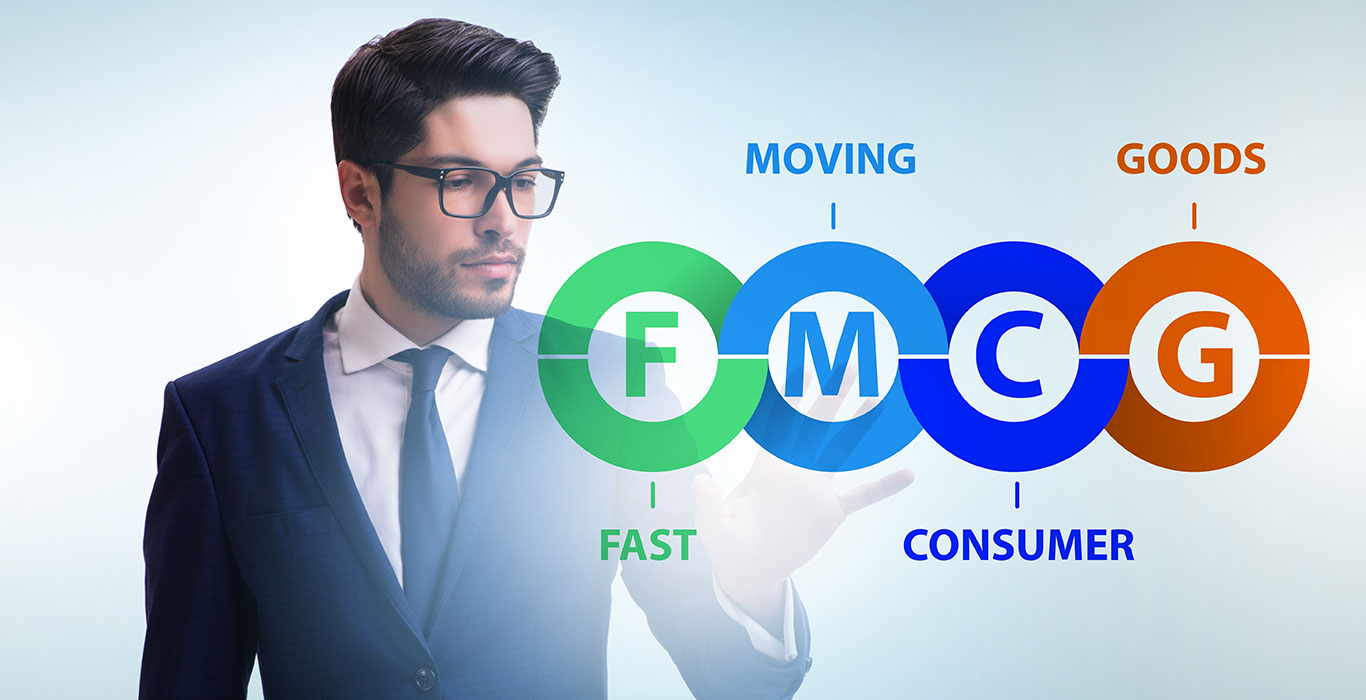
Retail and consumer goods brands using FMCG digital marketing strategies leverage case studies to demonstrate rapid market penetration and brand loyalty cultivation metrics that resonate strongly with B2B buyers in the FMCG space evaluating marketing partners.
Product Pages: Micro-Stories in Bullet Points
Even bullet-point features can carry narrative weight. Instead of “24-hour battery life,” write “Capture an entire workday, from morning commute to evening workout without searching for outlets.” The second version embeds the feature within a relatable daily narrative, helping readers envision product integration into their lives.
Storytelling as Information Gain: Beating AI in the 2026 Search Landscape
Google’s Search Quality Rater Guidelines explicitly prioritize “information gain” content that provides unique insights, perspectives, or data unavailable in existing search results. As AI-generated content floods the internet with competent but generic information, storytelling emerges as the primary differentiation mechanism for human expertise.
Why AI Struggles with Authentic Narrative
Large Language Models excel at synthesizing existing information patterns but fundamentally lack lived experience. An AI can describe customer pain points based on data analysis; it cannot authentically relate a specific customer’s journey with the emotional nuance, unexpected details, and human imperfection that makes stories believable.
Search engines increasingly use Natural Language Processing to detect experiential markers: specific sensory details, emotional vocabulary, temporal specificity (“On Tuesday morning, March 2023…”), and outcome uncertainty (“We didn’t know if the campaign would resonate…”). These elements signal human authorship and first-hand knowledge the core of E-E-A-T (Experience, Expertise, Authoritativeness, Trustworthiness).
The Information Gain Formula
Information Gain = Unique Perspective + Specific Examples + Emotional Depth + Unconventional Insights
Generic AI content scores low on all four dimensions. Story-driven copy naturally maximizes this formula:
- Unique Perspective: Your customer’s specific journey differs from aggregate industry data
- Specific Examples: Named clients, exact metrics, particular challenges provide verifiable detail
- Emotional Depth: Authentic stories include vulnerability, failure, and messy reality
- Unconventional Insights: Real experiences reveal non-obvious lessons that surprise and engage
Brands integrating AI in digital marketing strategically use AI for data analysis and pattern recognition while reserving storytelling and strategic narrative development for human experts. This hybrid approach maintains efficiency while preserving the authentic voice that search engines and readers reward.
Practical Implementation for 2026 Visibility
To future-proof your copywriting against AI commoditization:
Document customer stories systematically: Create interview protocols capturing emotional context, not just technical details. Ask “How did you feel when…” questions that reveal psychological states AI cannot fabricate.
Include unexpected specificity: Real stories contain seemingly irrelevant details that actually enhance believability. The fact that a customer was drinking coffee when they discovered your solution isn’t critical to the outcome, but it’s the type of specific, human detail that signals authentic experience.
Embrace narrative complexity: Real business relationships aren’t linear success stories. Acknowledge setbacks, learning curves, and evolution. This complexity signals genuine experience and builds trust through vulnerability.
Quantify emotional outcomes: Combine hard metrics with qualitative impacts. “Reduced processing time by 40%” plus “The team finally stopped dreading Monday mornings” provides both logical and emotional proof points that resonate across different decision-making styles.
Measuring Story-Driven Copy Performance
Storytelling’s effectiveness manifests across multiple metrics:
Engagement Metrics: Story-driven pages average 300% longer dwell time and 60% lower bounce rates compared to feature-focused equivalents. Use heatmaps to verify readers consume full narratives rather than scanning for bullet points.
Conversion Metrics: A/B tests consistently show 20-30% conversion rate improvements when feature lists are transformed into narrative frameworks. The improvement amplifies further down the funnel, story-exposed leads convert to customers 40% more frequently than those who only encountered traditional copy.
SEO Metrics: Pages with embedded customer stories earn 3x more backlinks organically, as journalists and bloggers prefer citing specific examples over generic claims. Featured snippet capture rates increase 250% when content includes structured narratives that answer “how” and “why” questions comprehensively.
Brand Metrics: Story-exposed audiences demonstrate 65% higher brand recall after 30 days and 40% higher Net Promoter Scores, indicating storytelling’s compound effect on long-term brand equity beyond immediate conversions.
Conclusion: The Irreplaceable Human Element
As artificial intelligence reshapes content creation, storytelling emerges not as a nostalgic craft but as the fundamental differentiator between forgettable information and memorable experiences. The copywriters who thrive in 2026 and beyond won’t be those who resist AI tools, but those who leverage them for research and efficiency while preserving the irreplaceable human capacity for authentic narrative.
Your customers don’t need more information, they’re drowning in it. They need meaning, connection, and assurance that someone understands their specific journey. Stories provide that assurance in ways algorithms cannot replicate. Every feature you offer solves a problem someone actually experienced. Every benefit you deliver transforms someone’s real situation. Those stories exist and your strategic advantage lies in telling them with the specificity, emotion, and authenticity that only human experience can provide.
The brands that dominate search results, conversion rates, and customer loyalty in coming years won’t be those with the most AI-optimized content. They’ll be those who use AI to work more efficiently while investing their human creativity where it matters most: crafting narratives that make people feel understood, inspired, and confident that your solution was built for someone exactly like them.
Frequently Asked Questions
Storytelling in copywriting is the strategic integration of narrative structures, including character development, conflict, and resolution, into marketing content to create emotional engagement and memorability. Unlike traditional promotional writing that focuses on features and benefits, storytelling embeds those elements within relatable human experiences that trigger empathy and trust, making complex information more accessible and persuasive.
Storytelling is important in copywriting because it activates neural responses that facts alone cannot trigger, releasing oxytocin and creating emotional connections that build authentic trust. Stories increase information retention by 22x compared to statistics, translating to higher brand recall, longer engagement, and stronger purchase intent. In competitive markets where products have similar features, storytelling becomes the primary differentiation mechanism that transforms commodities into brands.
Storytelling improves website copy by transforming abstract benefits into concrete scenarios that visitors can visualize themselves experiencing. When readers encounter narratives about customers like themselves overcoming familiar challenges, they process the information through emotional and experiential neural pathways rather than just analytical ones. This multi-dimensional processing increases dwell time by 300%, reduces bounce rates significantly, and helps visitors internalize your value proposition more deeply than feature lists ever could.
Yes, storytelling demonstrably increases website conversions by 20-30% in controlled A/B tests across industries. Stories work by helping prospects relate personally to problems being solved, visualize themselves achieving similar outcomes, and build emotional investment in the solution before making purchase decisions. The conversion impact amplifies throughout the customer journey: story-exposed leads progress through sales funnels 40% faster and convert to paying customers at significantly higher rates than those exposed only to traditional promotional messaging.
Storytelling can be strategically deployed across homepages (brand origin stories that explain company purpose), about pages (customer transformation archives that demonstrate impact), case studies (detailed three-act narratives with measurable outcomes), product pages (micro-stories embedded in feature descriptions), landing pages (PAS-S framework for conversion focus), and blog content (educational narratives that position expertise). Each page type benefits from narrative adaptation that matches user intent inspirational stories for awareness stages, specific success stories for consideration stages, and detailed implementation narratives for decision stages.
Absolutely. PPC campaigns are testing laboratories for SEO. High-converting keywords identified through PPC should become SEO content targets. Ad copy with strong click-through rates informs title tags and meta descriptions. Landing pages that convert PPC traffic reveal what messaging resonates. This intelligence accelerates SEO success by removing guesswork about what content to create and how to position it.
Copywriting and storytelling are complementary disciplines where copywriting provides the strategic framework for persuasion and conversion, while storytelling supplies the emotional resonance and memorability that makes persuasion effective. Professional copywriters use storytelling as a tool within the broader copywriting toolkit, not every message requires full narrative treatment, but strategic story placement dramatically amplifies copywriting effectiveness. The relationship works best when storytelling serves copywriting objectives rather than becoming self-indulgent narrative that loses sight of conversion goals and business outcomes.

Ashish Dalia is the CEO & Chief Digital Marketing Strategist at I Knowledge Factory Pvt. Ltd.
Ashish Dalia is the CEO & Chief Digital Marketing Strategist at I Knowledge Factory Pvt. Ltd.